
What the SIFT is
The Army's pamphlet: "The SIFT is a computer-based test battery that was developed using industry standard scientific methods to predict the success of students in aviation training programs. The complete test battery of the SIFT is the primary Selection Instrument for Army Aviation."
"The examinee must achieve a score equal to or higher than the qualifying score on the SIFT prior to selection for the Initial Entry Rotary Wing Program." And the number: "The minimum score required on the SIFT battery to qualify for the Army Aviation program is 40 (possible scores range from 20 to 80, with a mean of 50 and standard deviation of 10)."
Each service's own test is on the officer aptitude tests by branch page.
The seven subtests and their time limits
| Subtest | Real test | Practice version |
|---|---|---|
| Simple Drawings | 100 in 2 min | 100 in 2:00 |
| Hidden Figures | 50 in 5 min | 50 in 5:00 |
| Army Aviation Information Test | 40 in 30 min | 40 in 30:00 |
| Spatial Apperception Test | 25 in 10 min | 25 in 10:00 |
| Reading Comprehension Test | 20 in 30 min | 20 in 30:00 |
| Math Skills Test | 40 min, length varies | 30 in 40:00 |
| Mechanical Comprehension Test | 15 min, length varies | 30 in 15:00 |
The real-test column is paragraph 1-9 of the pamphlet. It adds a background section of 10 minutes and says "The SIFT exam takes approximately 2.5 hours to complete. Each subcomponent has separate directions and time limits."
When to guess and when not to
- Simple Drawings and Hidden Figures: do not guess at random. "In some subtests, scores are derived from the number of problems the examinee answers correctly, with a portion of the number of problems answered incorrectly deducted from the score. The examinee will not be able to answer all questions presented."
- Army Aviation Information, Spatial Apperception and Reading Comprehension: guess before time runs out. These "include a fixed number of questions," and "any unanswered problems receive an incorrect score."
- Math Skills and Mechanical Comprehension: work quickly, do not guess at random. They are adaptive: "the number and difficulty of questions presented to different examinees may vary," and "random guessing will, in most cases, be more detrimental to scores than the penalty received for not completing the entire test."
Retakes and how long a score lasts
- No retake after a qualifying score. "Once the examinee attains the qualifying score, the examinee cannot retest."
- One retake after a score below the minimum, from the 46th day. "The examinee may retest one time and no earlier than the 46th day following the previous attempt. If the examinee fails to attain a minimum qualifying score on the second attempt, the examinee is no longer authorized another SIFT retest and does not qualify for the Army's Aviation Program."
- The regulation says the same. AR 611-110, Selection of Army Aviation Officers and Warrant Officers (9 August 2023): "The second test must be no sooner than the 46th day following the first test. The applicant's immediate commander may approve the retest."
- An older answer you may still find. An undated Army Personnel Testing FAQ that some state National Guard sites still host gives the 181st day. The pamphlet and the regulation are newer; confirm with your education center before you schedule.
- A passing score is kept. The Army's warrant officer recruiting page: "Once you take and pass the SIFT that score will become your score for life."
The Army's own sample questions
These seven figures are the only SIFT questions the Army has published, from Chapter 2 of the pamphlet, "Selection Instrument for Flight Training Sample Questions." Each is shown as the pamphlet prints it, with the answer the pamphlet marks.
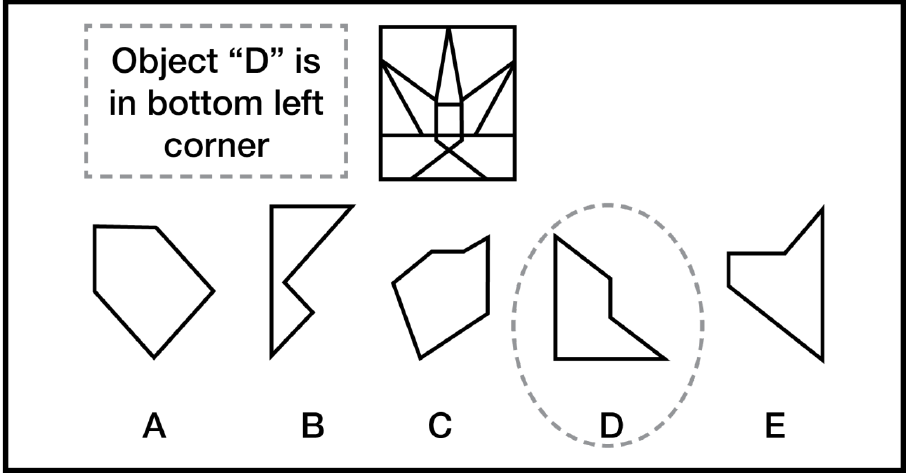
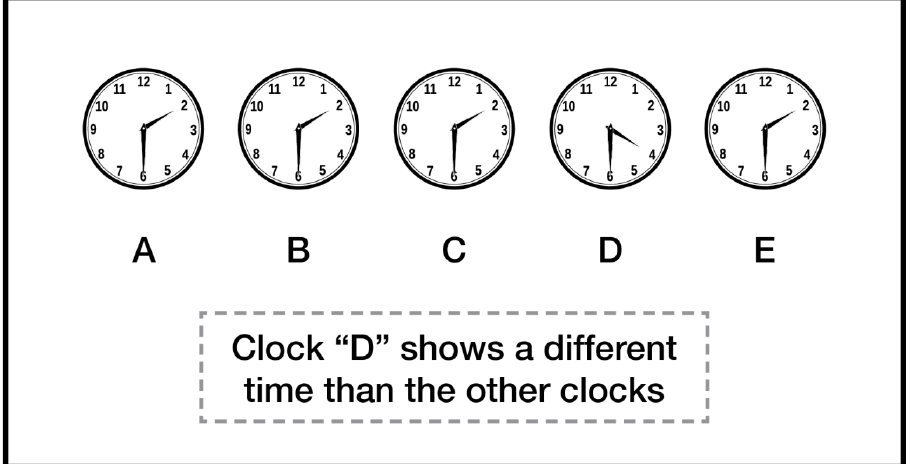
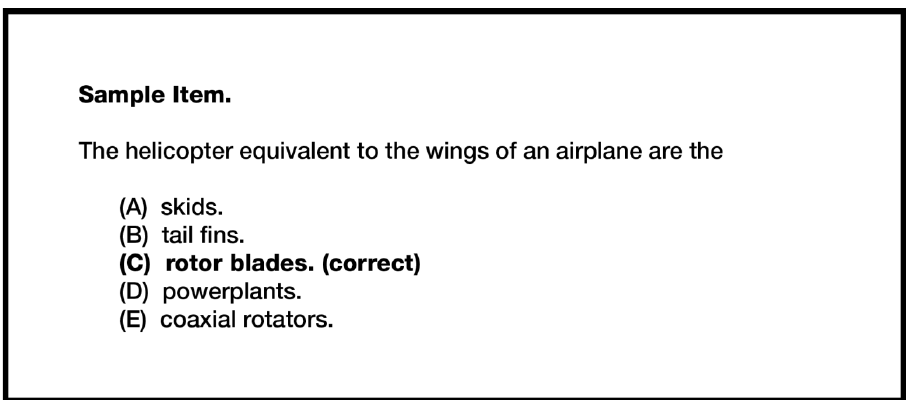
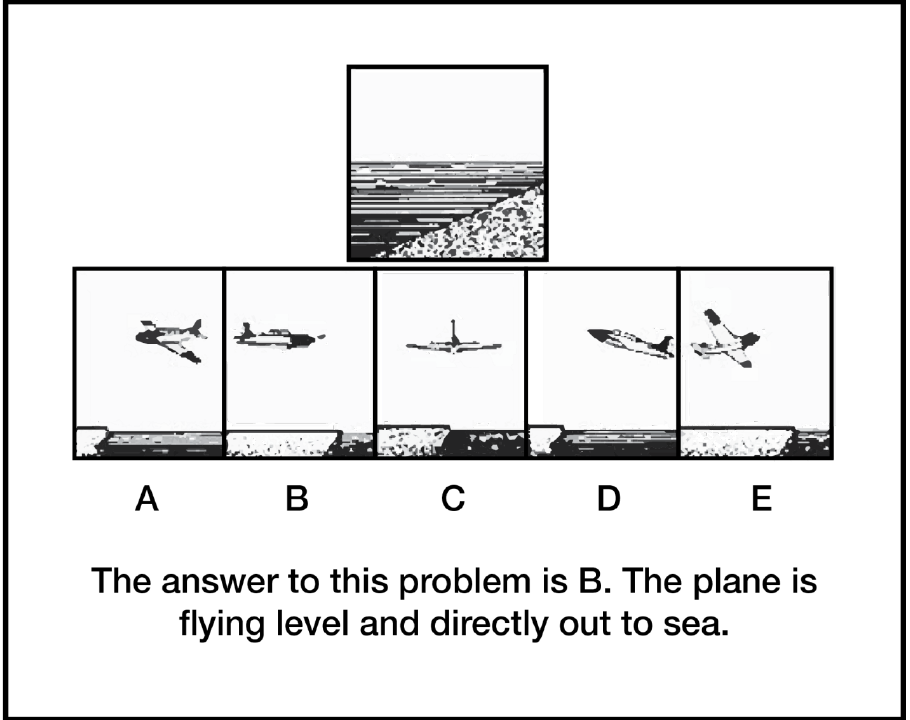
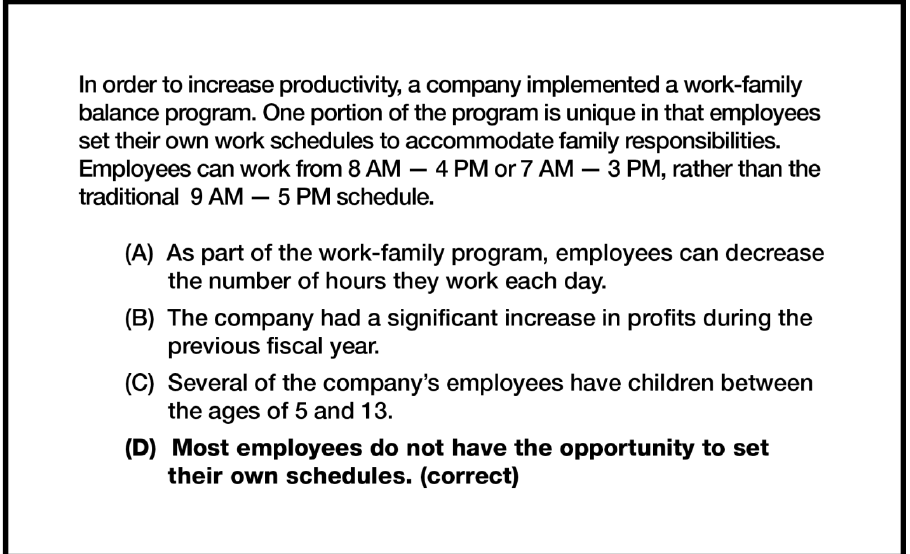
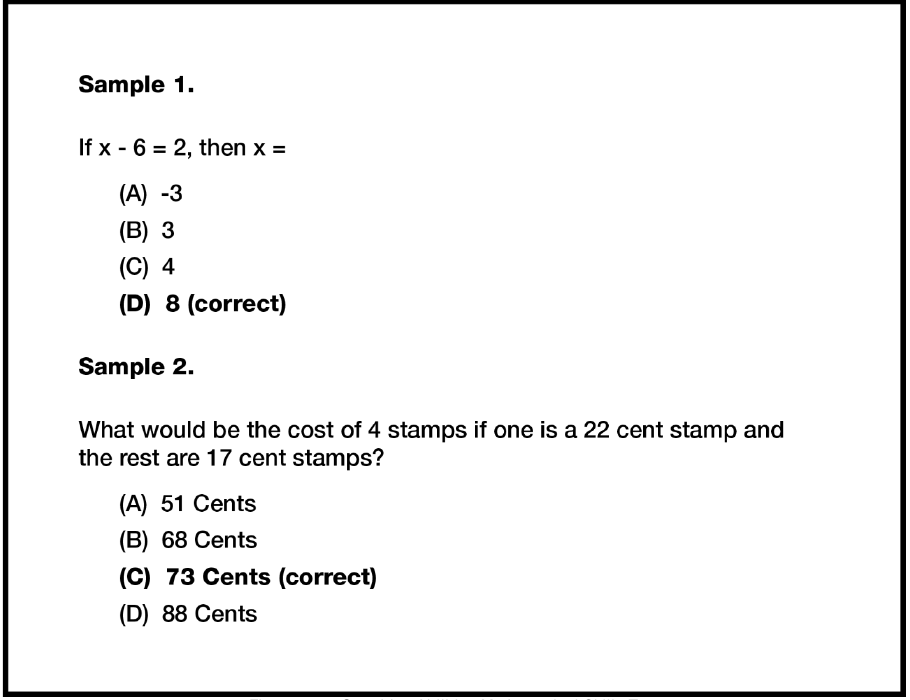
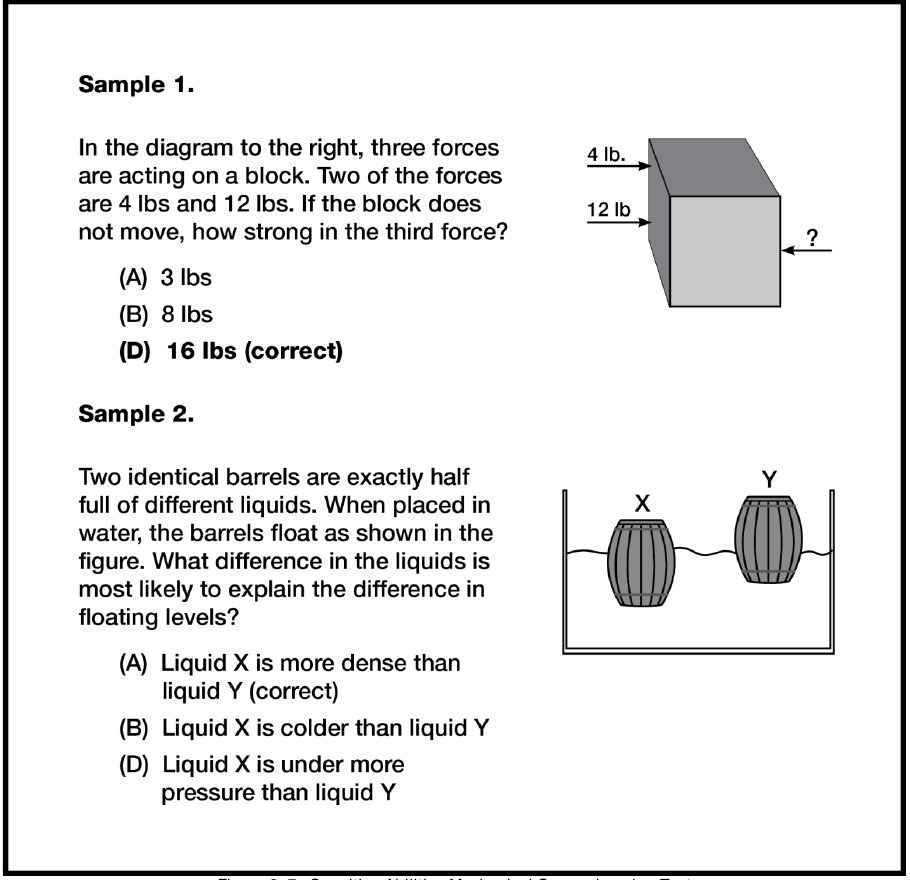
The captions of Figures 2-1 and 2-2 are the pamphlet's own: its first figure shows one drawing with five shapes to look for, and its second shows five clocks with one that differs.
The practice versions on this page
Versions A, B, C are this site's own questions, written in the style of each subtest. They are not real SIFT questions, and the Army did not write or review them. No question is repeated between versions. A result is a count of correct answers, not a SIFT score.
- Simple Drawings, Hidden Figures and Spatial Apperception are drawn by a program, and a second program proves each key: four drawings identical and one different; exactly one of the five figures present in the drawing and none of the other four anywhere in it; exactly one outside view matching the cockpit view. Our drawings are simple line figures and colored models, not the Army's artwork.
- Army Aviation Information: five choices, as in the Army's sample. Every question rests on a sentence quoted from the FAA's Helicopter Flying Handbook or Pilot's Handbook of Aeronautical Knowledge, named under the question.
- Reading, Math and Mechanical Comprehension are the same kinds of test the Navy, Marine Corps and Coast Guard use, so these questions are shared with the OAR and ASTB-E practice test. Every math answer is recomputed by a script and every reading answer rests on a sentence quoted from its passage.
- Not adaptive. On the real test Math Skills and Mechanical Comprehension adapt to your answers and their length varies. Here each has 30 questions in the Army's full time limit.
- Independent check. A second solver answered every written question without the key.
Where this comes from
Everything this page says about the real test is quoted from DA PAM 611-256-2, Selection Instrument for Flight Training Information (18 July 2022), from AR 611-110, Selection of Army Aviation Officers and Warrant Officers (9 August 2023), and from the U.S. Army Warrant Officer Recruiting, Steps To Determine Eligibility page. Read November 11, 2026.